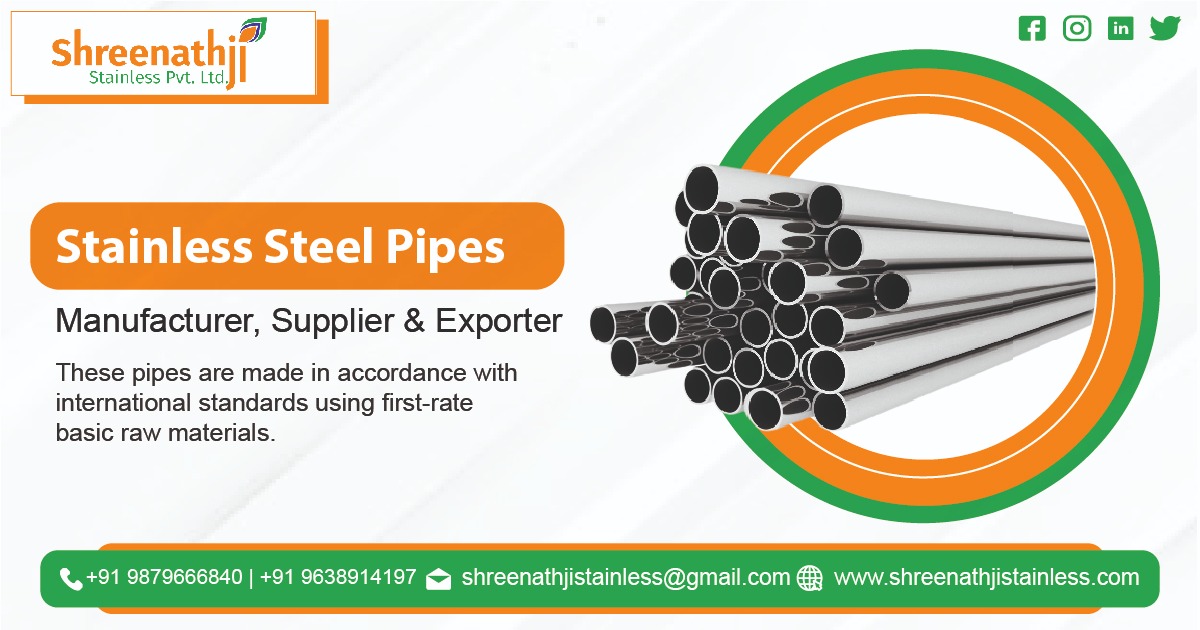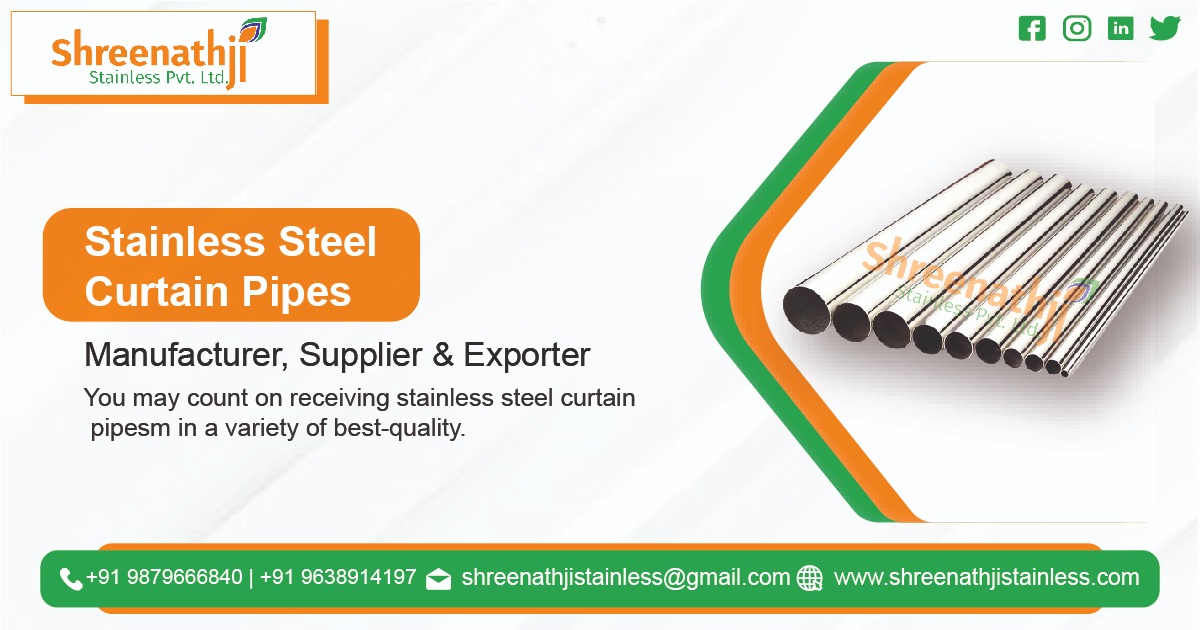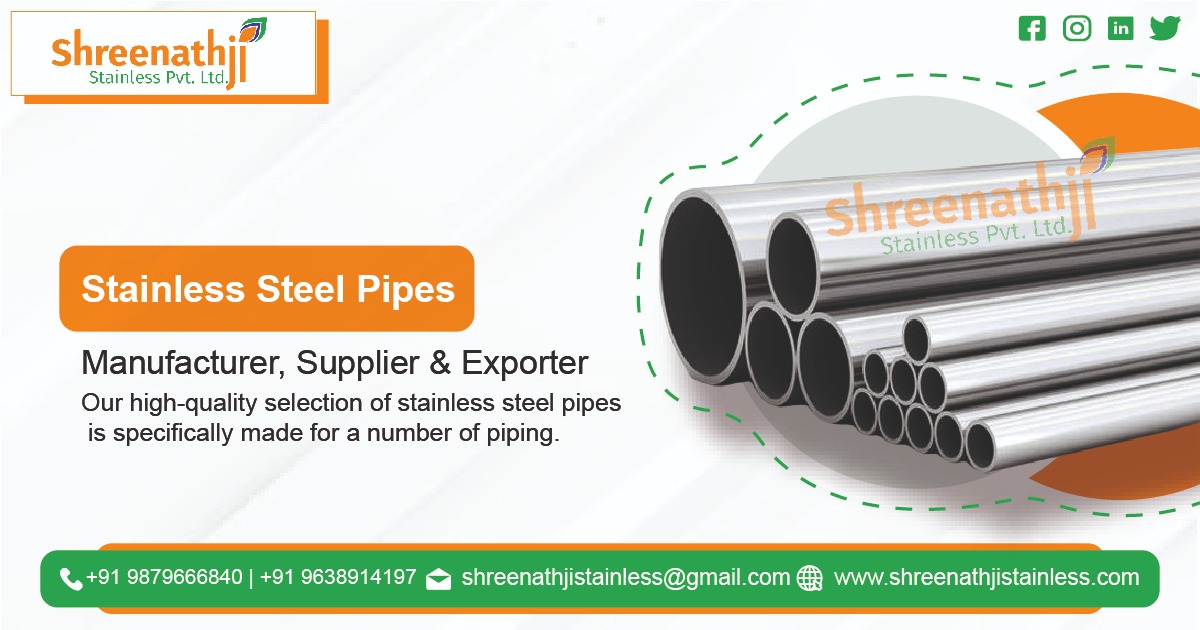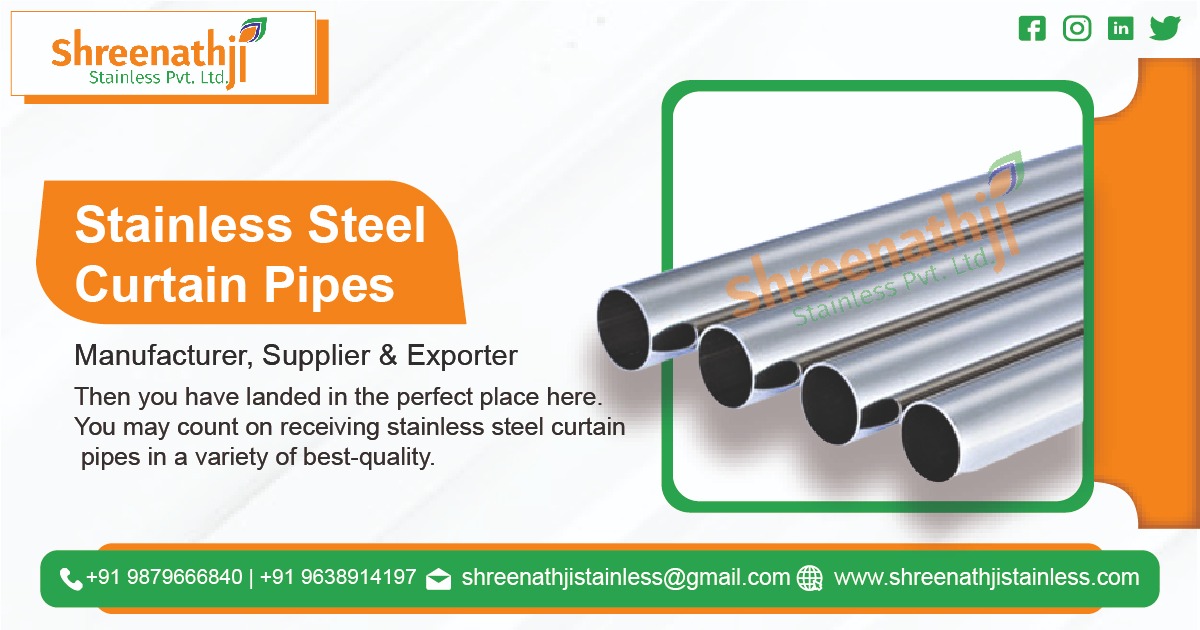
Industrial piping failures can lead to leakage, corrosion, maintenance costs, and production interruptions. SS 304 and SS 316 SS Pipes for Industrial Piping Systems offer material options for different operating conditions, with Shreenathji Stainless Pvt. Ltd. providing support from Ahmedabad, Gujarat, India.
Understanding the Difference Between SS 304 and SS 316 Pipes
SS 304 and SS 316 are austenitic stainless steel grades commonly considered for industrial piping. Both contain chromium and nickel, which contribute to corrosion resistance, strength, and fabrication suitability.
However, their chemical compositions make them suitable for different service conditions.
- SS 304: A commonly used grade for general industrial environments, water-related services, food-processing equipment, and applications where chloride exposure is controlled.
- SS 316: Contains molybdenum, which improves resistance to pitting and crevice corrosion, particularly in chloride-containing environments.
- SS 304L and SS 316L: Low-carbon variations often considered for welded piping systems where reducing the risk of weld-related sensitisation is important.
What Happens When the Pipe Grade Does Not Match the Process?
Selecting a pipe based only on its appearance or purchase price can create problems after installation. A material that performs adequately in one application may deteriorate faster in another.
Common issues include:
- Pitting corrosion: Localised damage can develop when stainless steel is exposed to unsuitable chloride conditions.
- Crevice corrosion: Deposits, tight joints, and stagnant areas can create conditions for localised corrosion.
- Welding-related problems: Incorrect material selection and fabrication practices can affect corrosion resistance around welded areas.
- Unexpected maintenance: Frequent inspection, cleaning, or pipe replacement can increase maintenance requirements.
- Material incompatibility: Certain chemicals and cleaning agents may not be suitable for the selected stainless steel grade.
For example, a general-purpose SS 304 line handling a chloride-rich solution may require a different material assessment than a water distribution line operating under controlled conditions.
How to Decide Between SS 304 and SS 316 for Your Piping Requirement
The right grade depends on the actual process conditions rather than the industry name alone.
Before placing an order, evaluate these factors:
1. Fluid composition: Identify whether the pipeline will carry water, chemicals, process liquids, gases, or cleaning solutions. Check chloride concentration and other corrosive constituents.
2. Operating temperature: Consider both normal and maximum process temperatures because corrosion behaviour can change with temperature.
3. Pressure requirements: Determine the design pressure and select the appropriate pipe wall thickness and schedule.
4. Installation environment: Indoor installations, outdoor exposure, coastal environments, and areas with chemical vapours may require different material considerations.
5. Fabrication requirements: If the pipeline involves extensive welding, discuss whether SS 304L or SS 316L is more appropriate.
6. Maintenance conditions: Consider cleaning chemicals, inspection access, deposits, and the possibility of stagnant fluid inside the pipeline.
A lower purchase price should not be the only deciding factor. Compare the initial material cost with the expected maintenance requirements and operating conditions.
Pipe Dimensions, Finish and Specifications That Need Attention
Even when the stainless steel grade is correct, incorrect dimensions can create installation and operational difficulties.
Buyers should confirm the following details before procurement:
| Technical parameter | What to verify |
| Material grade | SS 304, SS 316, or specified low-carbon grade |
| Outside diameter | Required pipe diameter |
| Wall thickness | Suitable thickness for design conditions |
| Pipe length | Standard or project-specific length |
| Manufacturing type | Seamless or welded, as required |
| Surface finish | Mill finish, polished, or specified finish |
| Pipe ends | Plain end, bevelled end, or other required preparation |
| Applicable standard | Relevant ASTM/ASME specification |
| Documentation | Material Test Certificate and inspection requirements |
ASTM A554, on the other hand, covers welded stainless steel mechanical tubing. Buyers should not treat every stainless steel pipe and tube specification as interchangeable.
The purchase order should clearly mention the applicable product standard, grade, dimensions, manufacturing route, and inspection requirements.
Where These Stainless Steel Grades Fit Into Industrial Operations
Different industries use stainless steel piping according to their process requirements.
Some relevant applications include:
- Chemical processing: Transfer lines for compatible chemicals, process liquids, and supporting utilities.
- Pharmaceutical manufacturing: Piping systems where material selection, internal surface condition, and cleaning procedures require careful consideration.
- Food and beverage processing: Product transfer and utility lines where hygiene and cleaning requirements influence pipe selection.
- Water treatment: Distribution lines and process connections, subject to water chemistry and treatment conditions.
- Oil and gas facilities: Selected process, utility, and auxiliary piping applications based on pressure, temperature, and fluid compatibility.
- Engineering plants: General fluid movement, equipment connections, and industrial service lines.
SS 304 and SS 316 SS Pipes for Industrial Piping Systems should be selected according to the specific fluid and operating environment. Neither grade is universally suitable for every chemical, temperature, or pressure condition.
Installation and Inspection Practices That Protect Pipe Performance
Proper installation helps maintain the intended performance of a stainless steel pipeline.
Consider these points during project execution:
Before installation
- Check pipe grade markings and identification.
- Verify outside diameter and wall thickness.
- Inspect pipes for dents, scratches, and surface contamination.
- Keep stainless steel materials separated from carbon steel contamination.
- Confirm fittings, flanges, valves, and other connecting components are compatible.
During installation
- Follow the approved piping drawings and layout.
- Provide adequate support to prevent unnecessary loading.
- Use suitable welding procedures and qualified personnel.
- Avoid excessive mechanical stress at joints.
- Maintain cleanliness during cutting, fabrication, and assembly.
After installation
- Conduct the specified inspection and pressure or leak testing under the approved project procedure.
- Verify connections and supports.
- Clean the pipeline using a method compatible with the selected grade.
- Complete commissioning checks before introducing process fluid.
Common Pipe Problems and Practical Inspection Checks
A properly selected stainless steel grade still requires routine inspection. Operating conditions, fabrication quality, deposits, and external exposure can influence its condition.
| Common issue | Possible cause | Practical check |
| Surface rust or staining | External contamination or unsuitable cleaning | Inspect the affected surface and cleaning history |
| Localised pitting | Chloride exposure or chemical incompatibility | Review fluid composition and corrosion conditions |
| Leakage at joints | Incorrect assembly or weld defects | Arrange qualified joint inspection |
| Pressure loss | Deposits, blockage, or flow restriction | Inspect the line and review process conditions |
| Discolouration near welds | Heat tint or inadequate post-weld treatment | Review fabrication and cleaning procedures |
| Premature corrosion | Incorrect grade or operating conditions | Compare material documentation with actual service conditions |
Maintenance should include visual inspection, leak monitoring, examination of joints, and checking for deposits or external corrosion.
Any corrective work involving pressure-containing pipework should follow approved procedures and be performed by qualified personnel.
Services
Shreenathji Stainless Pvt. Ltd. can be approached for stainless steel product-related requirements and procurement discussions.
- Stainless steel pipe requirement assessment and grade identification.
- Product selection based on dimensions and application needs.
- Guidance on pipe specifications and material documentation.
- Assistance with product enquiries and industrial procurement planning.
Location
Industrial buyers looking for SS 304 and SS 316 SS Pipes for Industrial Piping Systems can evaluate material requirements across Gujarat’s manufacturing and engineering centres. Relevant locations include Ahmedabad, Gandhinagar, Vadodara, Surat, Rajkot, Bhavnagar, Jamnagar, Junagadh, Morbi, Bharuch, Ankleshwar, Vapi, Valsad, Anand, Nadiad, Mehsana, Kalol, Sanand, Changodar, Vatva, Naroda, Odhav, Dahej, Halol, and Savli.
Product Requirement Coordination With Shreenathji Stainless Pvt. Ltd.
Industrial buyers often need to coordinate material grade, pipe dimensions, finish, and documentation before finalising procurement.
Shreenathji Stainless Pvt. Ltd. is engaged in manufacturing and supplying stainless steel pipes and related stainless steel products. The company operates from Ahmedabad, Gujarat, India.
For SS 304 and SS 316 requirements, buyers can discuss:
- Required stainless steel grade and product dimensions.
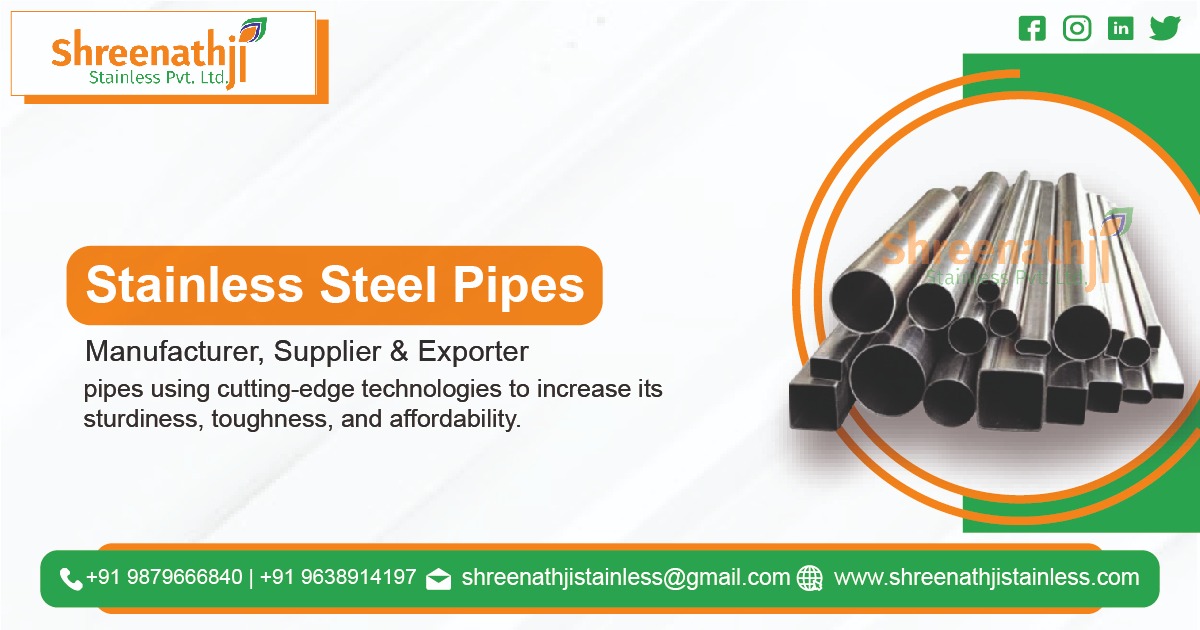
- Pipe shape, finish, and manufacturing specifications.
- Application-specific material requirements.
- Availability, documentation, and project procurement details.
The company website, shreenathjistainless.com, provides information about its stainless steel pipe range.
Procurement note: The company’s published product information specifically mentions SS 304 among its available grades. Buyers requiring SS 316 should confirm current grade availability and applicable specifications directly before ordering.
Frequently Asked Questions
Q: What is the main difference between SS 304 and SS 316 pipes?
A: SS 316 contains molybdenum, which improves resistance to pitting and crevice corrosion in many chloride-containing environments. SS 304 is commonly used for general industrial applications with suitable operating conditions.
Q: Are SS 304 pipes suitable for chemical industries?
A: Yes, SS 304 can be used for certain chemical-processing applications. However, compatibility must be checked against the actual chemical composition, concentration, temperature, and operating conditions.
Q: What documents should buyers request when purchasing stainless steel pipes?
A: Buyers should clarify the availability of Material Test Certificates, grade identification, dimensional inspection records, and applicable testing documentation according to project requirements.
Q: Should SS 316 always be selected instead of SS 304?
A: No. SS 316 is not automatically necessary for every application. The selection should consider corrosion exposure, operating conditions, fabrication requirements, and overall project cost.
Conclusion
Reliable industrial piping begins with matching the stainless steel grade to the process environment, pressure, temperature, and fabrication requirements. SS 304 and SS 316 SS Pipes for Industrial Piping Systems offer different material characteristics for industrial projects. Shreenathji Stainless Pvt. Ltd. provides manufacturing support from Ahmedabad, Gujarat, India.
Discuss your stainless steel pipe requirements with Shreenathji Stainless Pvt. Ltd. for product availability, grade selection, dimensional requirements, and procurement assistance.
Website: https://shreenathjistainless.com/
Email: shreenathjistainless@gmail.com
Phone No: +91 9879666840 | +91 9638914197
For more information, please feel free to contact us.